Imagine a piano chord — you hear a single sound, but it is actually a blend of several notes. The Fourier transform does the same for any signal: it reveals the individual frequencies hiding inside, showing not only which frequencies are present, but also how strong each one is.
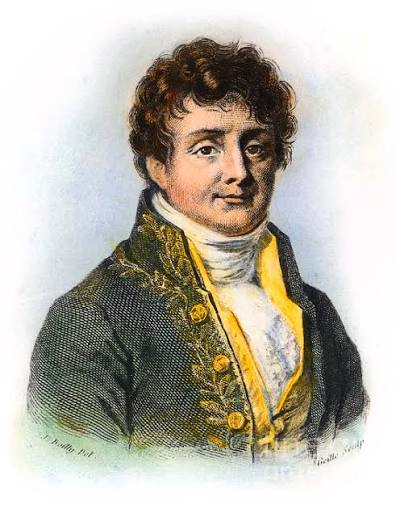
First introduced by the French mathematician Jean‑Baptiste Joseph Fourier in 1822, this idea revolutionised science and engineering. Fourier was studying heat transfer, but his method turned out to be far more universal. Today, it underpins everything from MP3 compression and speech recognition to radar, medical imaging, and even the detection of gravitational waves.
This article explains the Fourier transform step by step — from the continuous version through the DFT to the FFT that makes real‑time analysis possible. It includes interactive plots, a practical example, and a clear explanation of magnitude, phase, and filtering in the frequency domain.
Continue reading: The Fourier Transform: From Time to Frequency — a complete guide with examples, interactive plots, and practical applications.